RTOS data and instruction cache invalidation and writeback helpers. More...
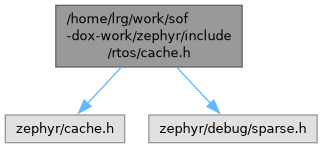
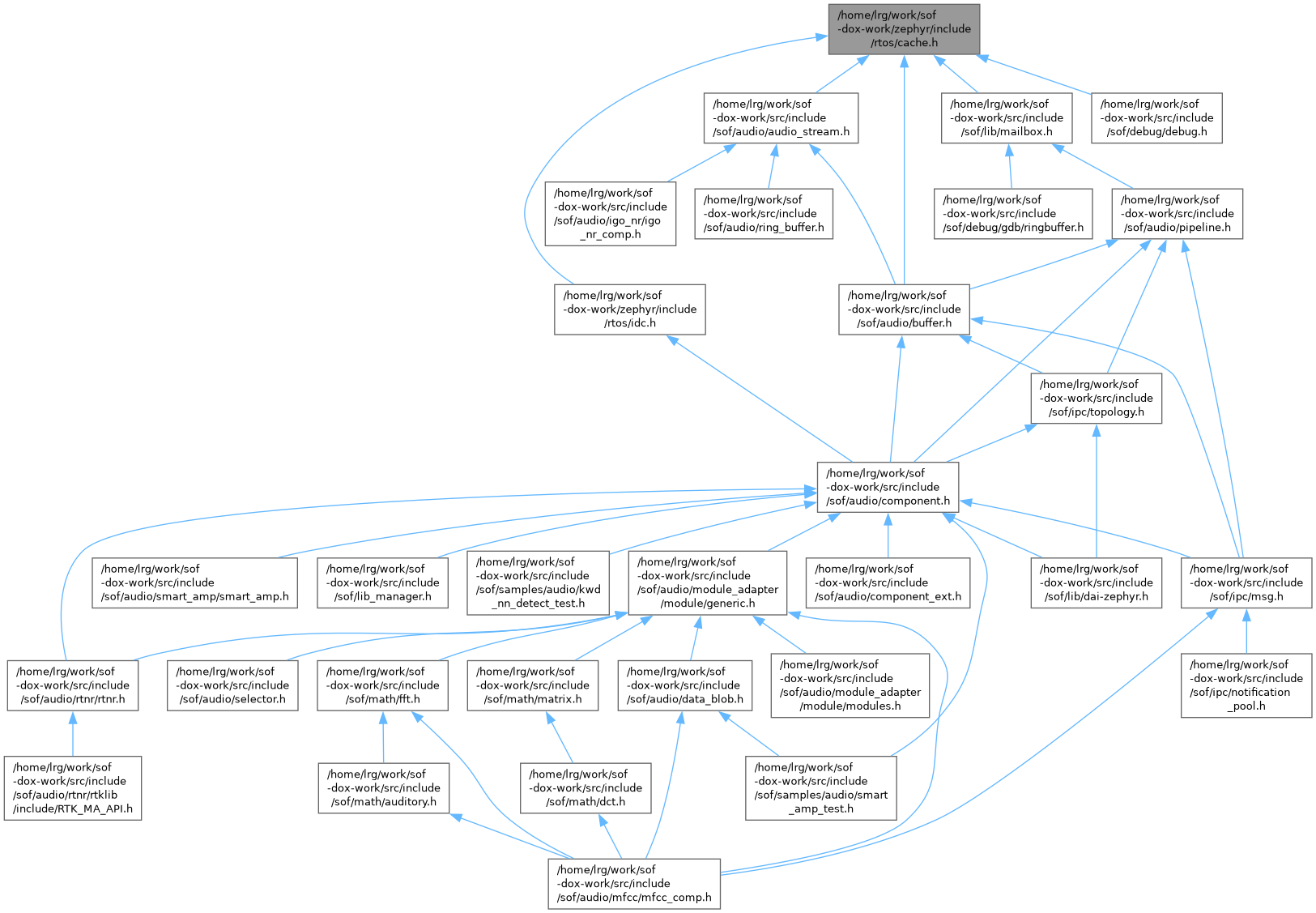
Go to the source code of this file.
Macros | |
| #define | __SOF_LIB_CACHE_H__ |
Functions | |
| static void | dcache_writeback_region (void *addr, size_t size) |
| Write back (flush) modified data cache lines to memory. | |
| static void | dcache_invalidate_region (void *addr, size_t size) |
| Invalidate data cache lines in the specified memory region. | |
| static void | icache_invalidate_region (void *addr, size_t size) |
| Invalidate instruction cache lines in the specified memory region. | |
| static void | dcache_writeback_invalidate_region (void *addr, size_t size) |
| Write back and invalidate data cache lines in the specified memory region. | |
Detailed Description
RTOS data and instruction cache invalidation and writeback helpers.
Macro Definition Documentation
◆ __SOF_LIB_CACHE_H__
| #define __SOF_LIB_CACHE_H__ |
Function Documentation
◆ dcache_invalidate_region()
|
inlinestatic |
Invalidate data cache lines in the specified memory region.
- Parameters
-
addr Starting address of the memory region to invalidate. size Size in bytes of the region to invalidate.
Discards cached data lines covering the address range so subsequent reads fetch fresh data directly from physical SRAM or DMA-updated memory.
◆ dcache_writeback_invalidate_region()
|
inlinestatic |
Write back and invalidate data cache lines in the specified memory region.
- Parameters
-
addr Starting address of the memory region. size Size in bytes of the region.
Flushes modified cache lines back to memory and then invalidates them. Typically used for bidirectional DMA buffers or when reallocating SRAM pools.
◆ dcache_writeback_region()
|
inlinestatic |
Write back (flush) modified data cache lines to memory.
- Parameters
-
addr Starting address of the memory region to flush. size Size in bytes of the region to flush.
Flushes dirty lines in the data cache covering the specified address range back to physical memory or SRAM. Mandatory before handing buffers over to hardware DMA or notifying peer cores / host.
◆ icache_invalidate_region()
|
inlinestatic |
Invalidate instruction cache lines in the specified memory region.
- Parameters
-
addr Starting address of the code memory region to invalidate. size Size in bytes of the code region.
Used after dynamically loading or relocating executable code (e.g. LLEXT modules) to ensure the instruction pipeline does not execute stale instructions.